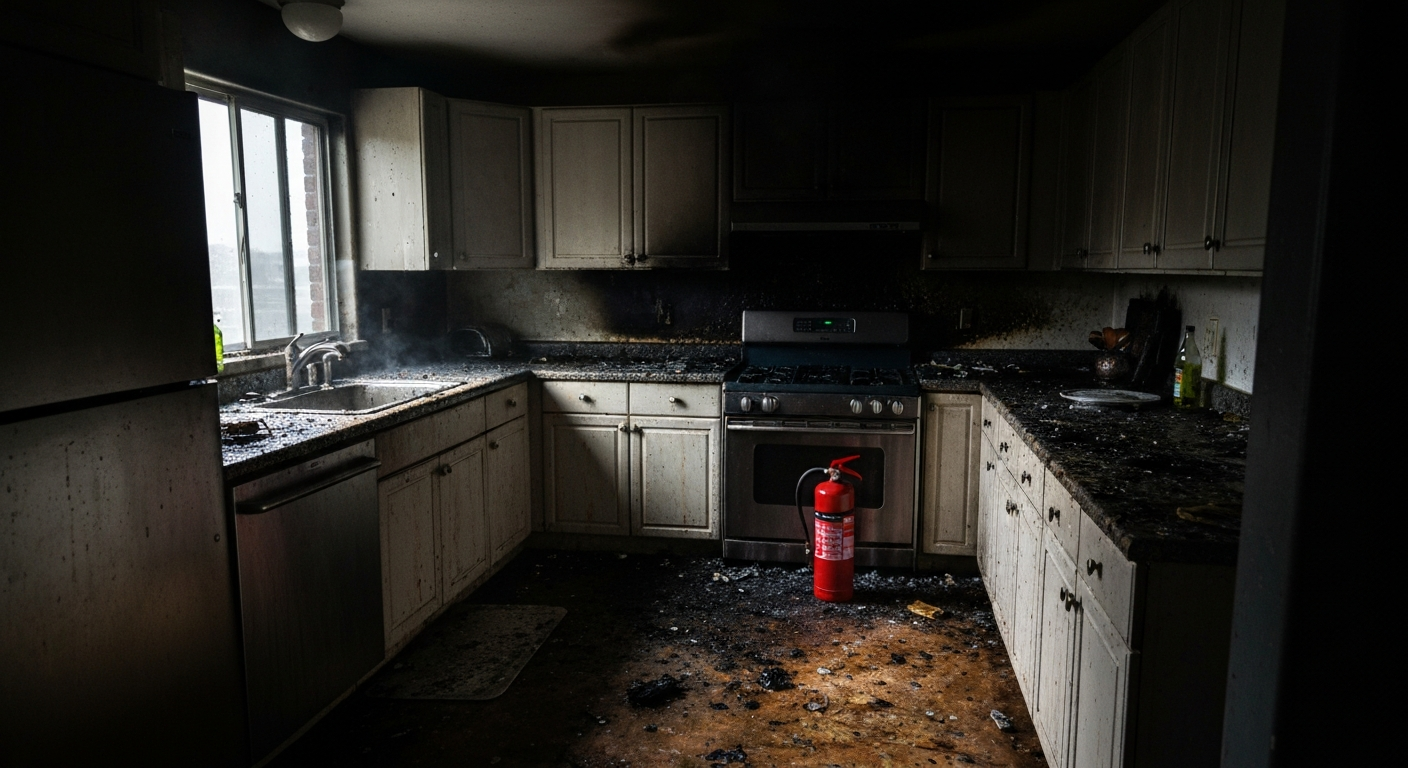
Kitchen fires are the leading cause of home fires in the United States. A grease fire can ignite in seconds and spread rapidly through your cabinets and exhaust system, causing devastating smoke and structural damage.
The Golden Rule: Never Use Water
The most critical rule of a grease fire is to never throw water on it. Water is heavier than oil, so it sinks to the bottom of the pan, instantly vaporizes into steam, and blasts flaming grease particles throughout the kitchen, causing a massive fireball. Instead, you must cut off the oxygen:
- Smother It: Slide a metal lid or baking sheet over the pan and turn off the heat. Do not lift the lid to check it.
- Baking Soda: Dump heavy amounts of baking soda or salt on the flames (Never use flour or baking powder, which can explode).
- Fire Extinguisher: Use a Class K (kitchen) or Class ABC fire extinguisher, aiming at the base of the fire.
The Invisible Threat: Protein Smoke
Unlike wood fires that leave black, powdery soot, grease fires produce "protein smoke." This type of smoke is practically invisible but leaves a sticky, yellowish, foul-smelling residue on every surface of your home. It binds tightly to paint, penetrates cabinet finishes, and coats appliances.
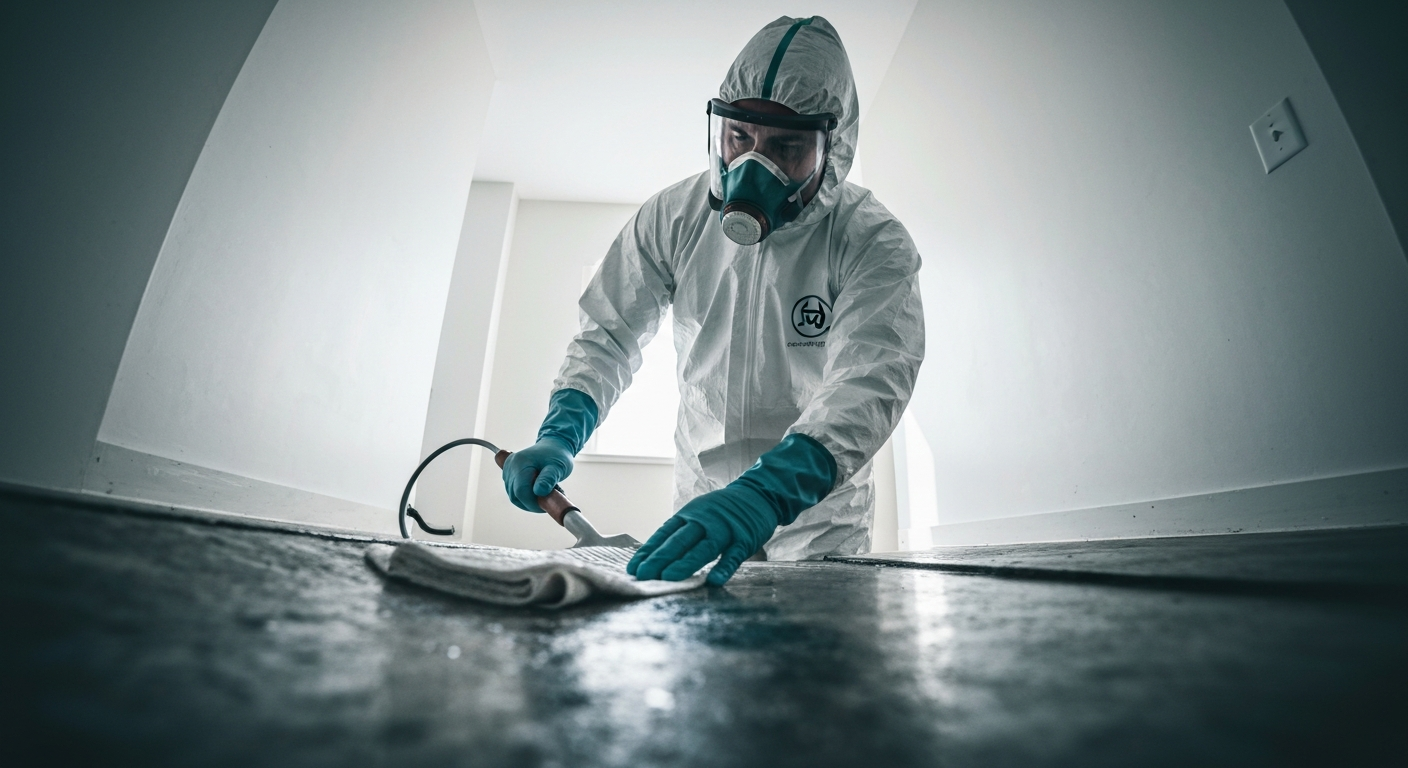
Protein smoke requires specialized chemical sponges and heavy-duty alkaline degreasers to remove. Standard household cleaners will just smear it around, embedding the foul odor deeper into the pores of the material.
Ozone and Hydroxyl Treatments
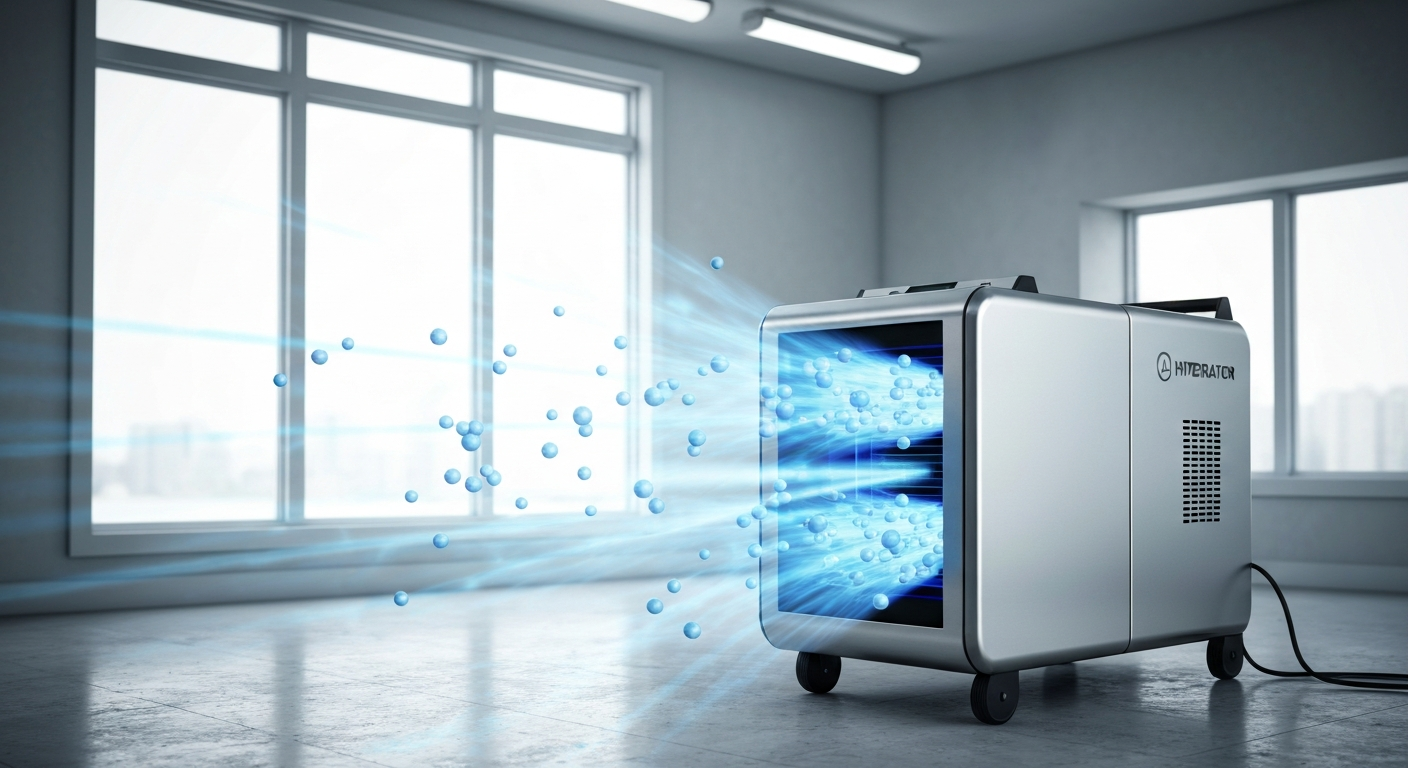
Because protein odors are so pervasive, wiping surfaces is rarely enough. Professional restoration teams utilize Hydroxyl generators (which are safe to use while occupied) or Ozone generators (which require the home to be vacant) to chemically break down the odor-causing molecules suspended in the air and trapped in fabrics.
HVAC Contamination
"If your HVAC system was running during the grease fire, protein smoke was sucked directly into your ductwork. You must have your ducts professionally cleaned and sealed, otherwise your house will smell like burnt grease every time the AC kicks on." — Xavier