Biohazard cleanup is not standard cleaning. Whether dealing with a trauma scene, unattended death, or severe sewage backup, the protocols required to return a space to a safe, habitable condition are strict and heavily regulated.
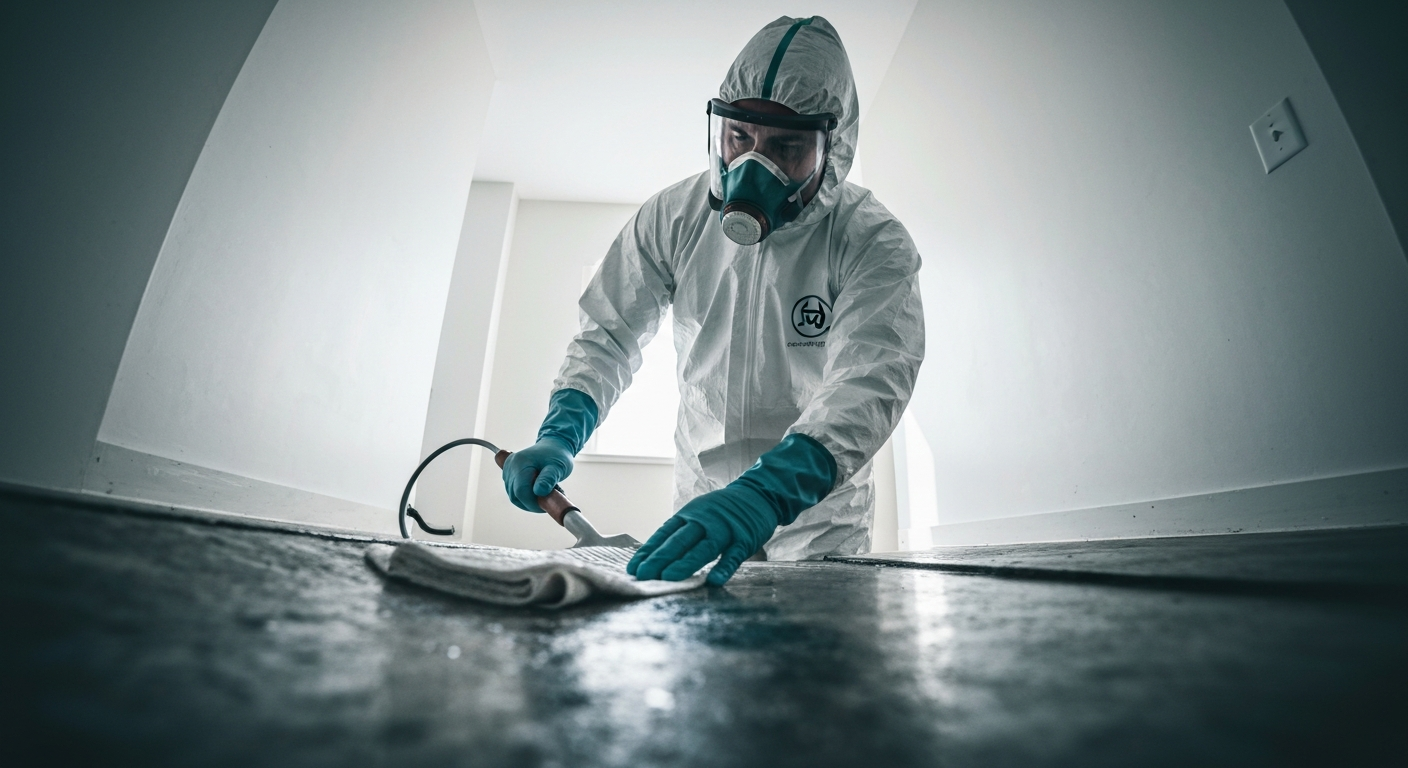
Bloodborne Pathogen Elimination
Pathogens like Hepatitis B, Hepatitis C, HIV, and MRSA can survive outside the body for days or even weeks in the right conditions. Professional biohazard teams use EPA-registered hospital-grade disinfectants, oxidative chemicals, and follow strict OSHA regulations to ensure every microscopic trace of biological material is eradicated. Standard bleach is often insufficient against complex biological matrices.
The Hidden Dangers of Porous Materials
One of the biggest mistakes in DIY biohazard cleanup is attempting to sanitize porous items. Biological fluids quickly penetrate past the surface. Materials that cannot be fully sterilized must be meticulously removed and disposed of, including:
- Carpet and Padding: Fluids pool beneath the surface and soak into the subfloor.
- Drywall and Baseboards: Blood and sewage wick upward through capillary action.
- Mattresses and Upholstery: Deeply absorbent and impossible to guarantee 100% pathogen-free.
- Unsealed Wood: Grout lines and hardwood joints trap microscopic bacteria.
Proper Disposal & Medical Waste Regs
Biohazardous waste cannot be thrown in the regular municipal trash. It must be placed in specifically rated red biohazard bags, stored in rigid, leak-proof containers, and transported by licensed medical waste carriers to approved incineration facilities. Violating these disposal laws carries heavy criminal and civil penalties, as it risks public health.
Compassion and Discretion
"Beyond the technical requirements, true biohazard professionals operate with deep empathy. We arrive in unmarked vehicles to protect your privacy and handle the physical and emotional weight of the situation so the family doesn't have to." — Xavier