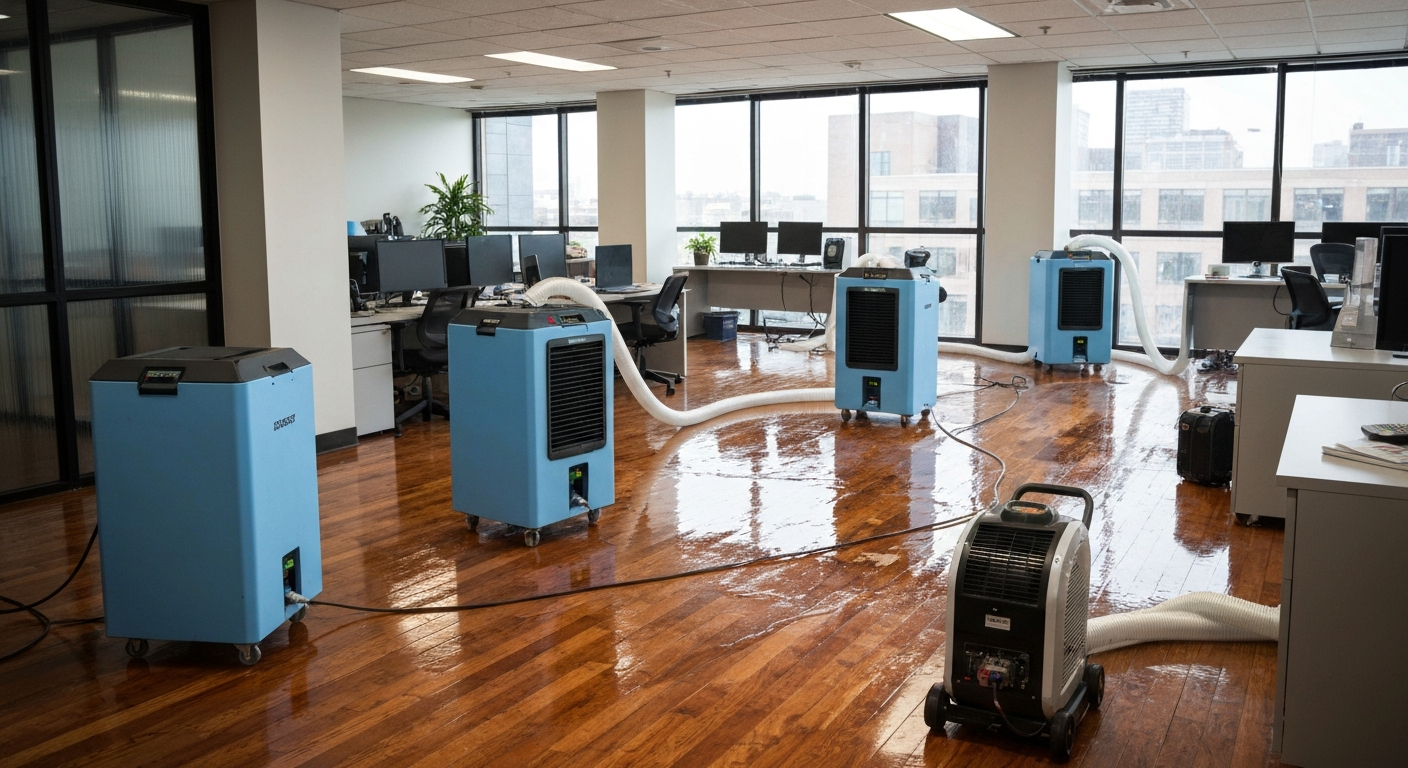
Hardwood floors are a massive investment in your home. When a pipe bursts or a dishwasher leaks, the wood rapidly absorbs the moisture, leading to cupping, crowning, and buckling. But can they be saved?
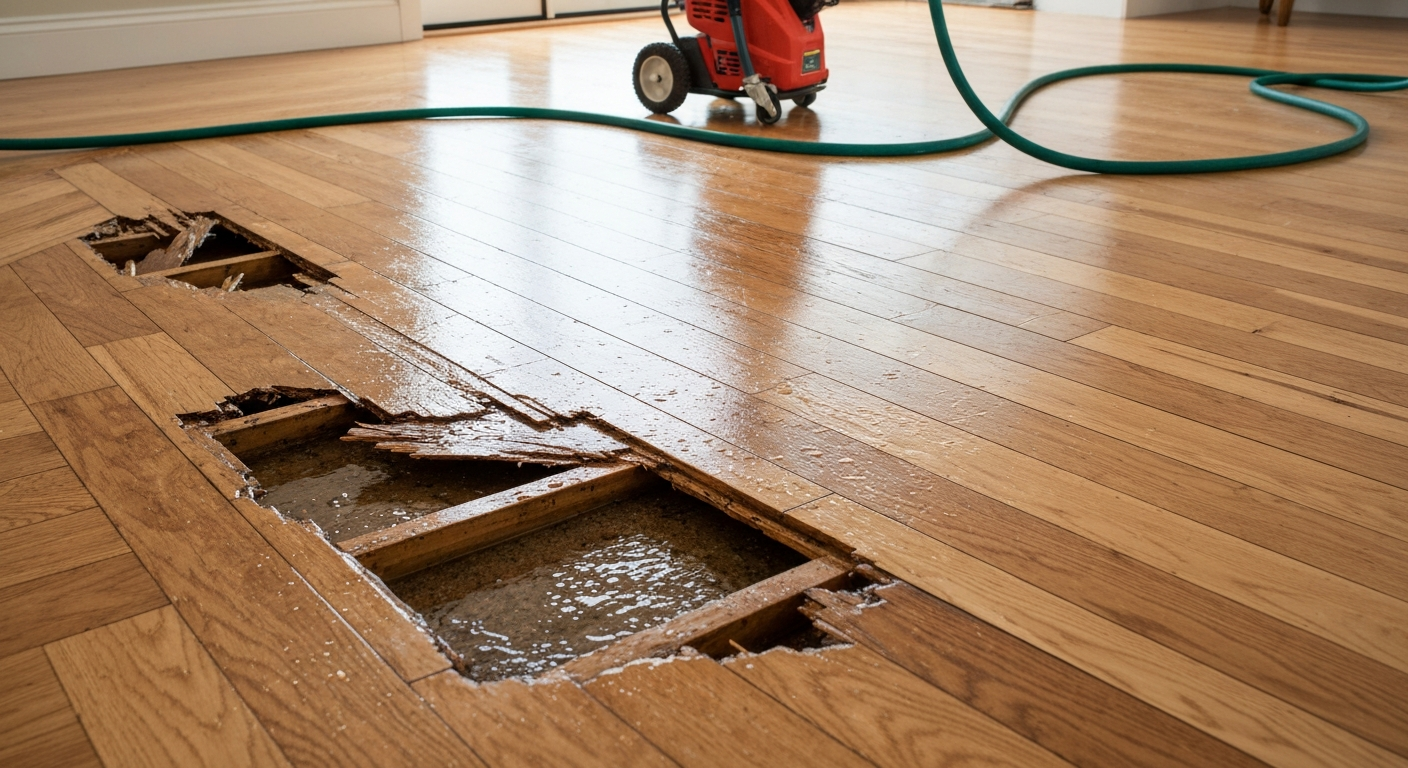
Time is the Ultimate Enemy
Wood is hygroscopic, meaning it absorbs moisture from the air and direct contact. If standing water is left on hardwood for more than 24 hours, the expansion pressure can actually push walls outward and cause irreversible buckling.
Cupping vs. Crowning
Understanding how wood reacts to moisture helps determine the restoration approach:
- Cupping: The edges of the wooden planks raise higher than the center. This happens when the bottom of the wood is wetter than the top.
- Crowning: The center of the board bulges higher than the edges. This often occurs if the surface is left wet, or if cupped floors are sanded prematurely before fully drying.
- Buckling: The most extreme reaction, where the wood physically detaches from the subfloor.
Specialized Drying Mats
We use specialized floor drying systems that consist of large rubber mats hooked up to high-pressure vacuums. These mats are taped to the floor and physically extract water vapor from deep within the wood grain and the subfloor beneath it, often saving the floor from needing replacement.
The Refinishing Rule
"Never sand or refinish a water-damaged hardwood floor until a professional has verified with a moisture meter that the subfloor is completely dry. If you sand too early, the floor will crown once it eventually dries." — Xavier